F.W. Murnau
4 credits on HibingeTV
German film director and a pioneer of the expressionist movement. Born Friedrich Wilhelm Plumpe in 1888, he took the name Murnau from the town where he grew up. Best known for Nosferatu (1922), an unauthorized adaptation of Dracula that led to a lawsuit and an order to destroy all copies. Some survived, and the film became his most enduring work. He moved to Hollywood in 1926 and made Sunrise, which won a unique Oscar at the first Academy Awards. He died in a car crash on the Pacific Coast Highway in 1931, a week before his last film Tabu premiered.
Directed
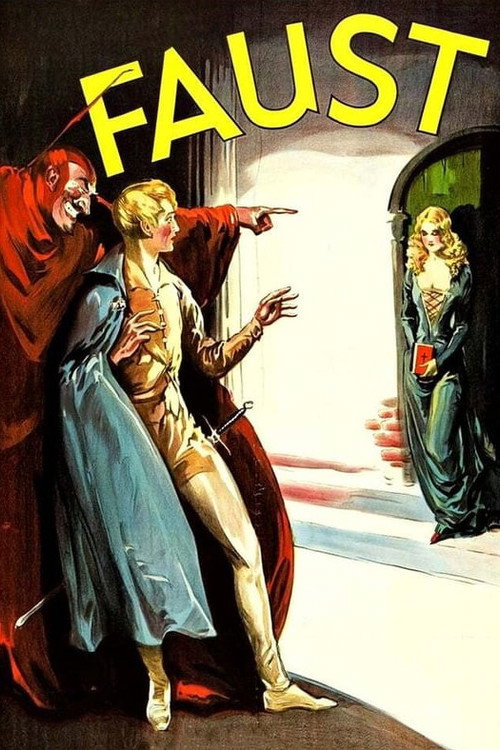
Fantasy, Horror
F.W. Murnau's final German film is a lavish silent adaptation of the Faust legend, drawing on Goethe and older folk versions of the tale. An archangel and Mephisto wager over the soul of an aged scholar, and the devil unleashes a plague to drive Faust to desperation. The pact gives Faust youth and worldly pleasure, but the story turns on his seduction of the innocent Gretchen and the tragedy that follows. Emil Jannings plays Mephisto as a leering, theatrical tempter, while Gosta Ekman ages and de-ages across the picture. The film is a high point of German Expressionism, famous for its optical tricks, painted skies, and the surreal image of Mephisto's wings spreading over a miniature town. It was a financial disappointment on release but has been revered by critics ever since. The film entered the public domain in the United States in 2022.
Fantasy · Horror · Drama · Silent
Faust
1926 - Fantasy
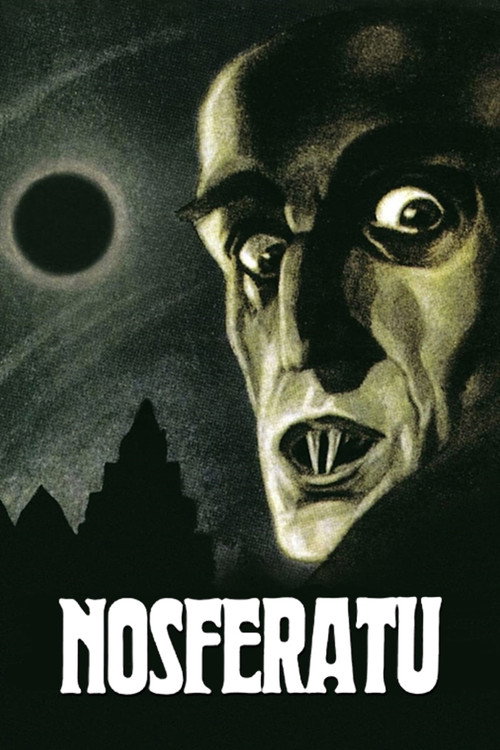
Horror, Silent
An unauthorized adaptation of Bram Stoker's Dracula, made without securing the rights. The names were changed but the Stoker estate sued anyway and won, ordering all copies destroyed. A few survived, which is why we can watch it today. Count Orlok, the rat-faced vampire, buys a house in the fictional town of Wisborg and brings plague with him from Transylvania. Max Schreck's performance is still unsettling a century later. The film is a landmark of German Expressionist cinema and one of the earliest feature-length horror films.
Horror · Silent
Nosferatu
1922 - Horror

Romance, Drama
F.W. Murnau's first American film and one of the high points of silent cinema. A farmer is lured by a woman from the city into a plan to drown his wife and run away with her; the wife escapes, the husband is consumed by guilt, and the two travel by tram to the city, where their marriage is slowly, tenderly rebuilt. The story is simple, almost a fable, but Murnau tells it with layered dissolves, forced perspective, and tracking shots that move through spaces as if the camera were breathing. Charles Rosher and Karl Struss shared the first ever Academy Award for cinematography, and the film won the only Oscar ever given for "Unique and Artistic Picture." Janet Gaynor's performance is the quiet center of the film. Its copyright was renewed in 1954, and it entered the public domain on January 1, 2023.
Romance · Drama · Silent
Sunrise: A Song of Two Humans
1927 - Romance
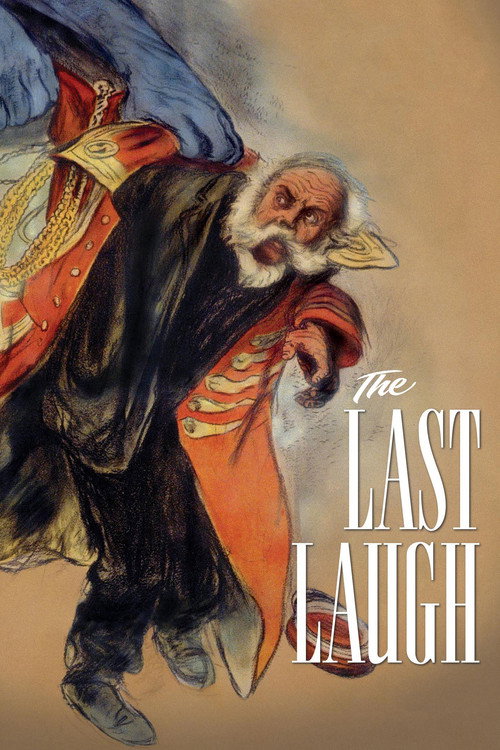
Drama, Silent
F.W. Murnau's study of a proud hotel doorman, played by Emil Jannings, who is demoted to washroom attendant and stripped of the uniform that gave him his identity. Working from a screenplay by Carl Mayer, Murnau tells nearly the whole story without a single intertitle, letting Karl Freund's unchained camera convey the porter's humiliation and fantasies of grandeur. The camera rides up elevators, swings through the hotel lobby, and tilts with the porter's drunken reeling, techniques that astonished audiences in 1924. A tacked-on happy ending, imposed against Murnau's wishes, only underscores the bleakness that precedes it. The film was a landmark of German Kammerspielfilm and a direct influence on the move toward purely visual storytelling in the late silent era. The film entered the public domain in the United States in 2020.
Drama · Silent
The Last Laugh
1924 - Drama