Emil Jannings
5 credits on HibingeTV
German actor, born in 1884, and the first recipient of the Academy Award for Best Actor. A towering presence of the silent screen, he starred in The Last Laugh (1924), Variety (1925), Faust (1926), and The Blue Angel (1930). In Faust he plays Mephisto as a gleeful, theatrical temptor. His Hollywood career ended with the coming of sound and his thick German accent, and he returned to Germany, where he later made films under the Nazi regime. He died in 1950.
Acted In
Fantasy, Horror
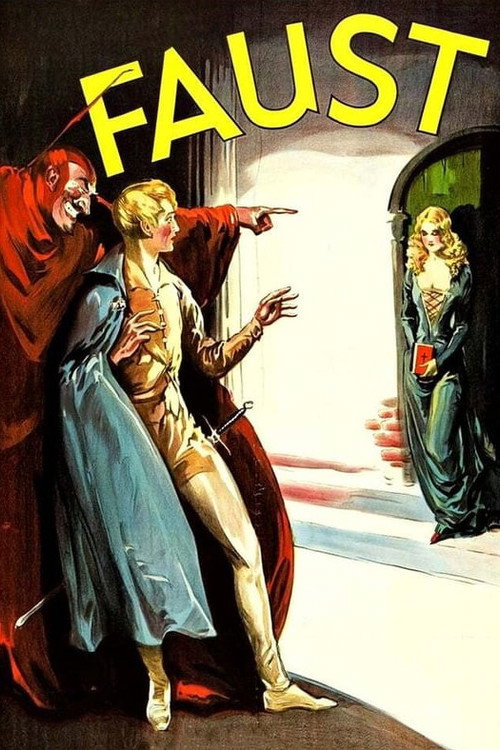
F.W. Murnau's final German film is a lavish silent adaptation of the Faust legend, drawing on Goethe and older folk versions of the tale. An archangel and Mephisto wager over the soul of an aged scholar, and the devil unleashes a plague to drive Faust to desperation. The pact gives Faust youth and worldly pleasure, but the story turns on his seduction of the innocent Gretchen and the tragedy that follows. Emil Jannings plays Mephisto as a leering, theatrical tempter, while Gosta Ekman ages and de-ages across the picture. The film is a high point of German Expressionism, famous for its optical tricks, painted skies, and the surreal image of Mephisto's wings spreading over a miniature town. It was a financial disappointment on release but has been revered by critics ever since. The film entered the public domain in the United States in 2022.
Fantasy · Horror · Drama · Silent
Faust
1926 - as Mephisto
Drama, Music
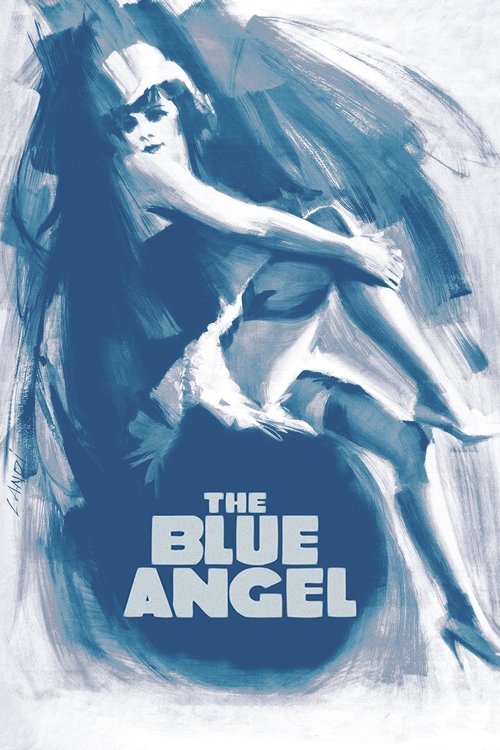
Josef von Sternberg's adaptation of Heinrich Mann's novel Professor Unrat follows a respectable schoolteacher, Immanuel Rath, who is undone by his infatuation with Lola Lola, the cabaret singer at the Blue Angel. Emil Jannings plays the professor's descent from authority to humiliation, and Marlene Dietrich, in her breakthrough role, introduces "Falling in Love Again (Can't Help It)." Von Sternberg's command of light and shadow gives the cabaret scenes a smoky opulence that defined his style. The film made Dietrich an international star and launched her seven-film collaboration with von Sternberg in Hollywood. Published in 1930, it entered the public domain in the United States on January 1, 2026.
Drama · Music
The Blue Angel
1930 - as Professor Immanuel Rath
Drama, War
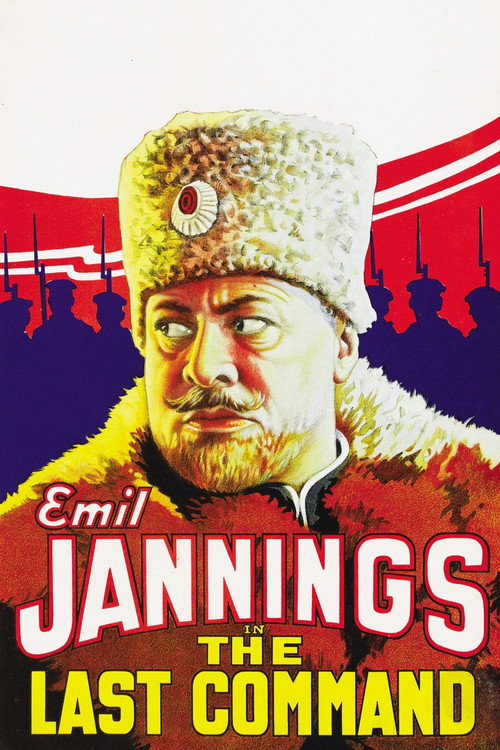
Josef von Sternberg's first American film with Emil Jannings, made the year before they would make The Blue Angel together. Jannings plays a deposed Russian grand duke who has fled the Revolution and now scrapes by as a Hollywood extra, hired to play a general in a film about his own downfall. The role-within-a-role lets Jannings collapse the distance between his past authority and present humiliation, and the framing device is what the film is built on. William Powell plays the revolutionary who once served him and now directs him. The Last Command is a film about cinema's power to re-stage a life, and it earned Jannings the first Academy Award for Best Actor. The 1928 film entered the United States public domain on January 1, 2024.
Drama · War · Silent
The Last Command
1928 - as Grand Duke Sergius Alexander
Drama, Silent
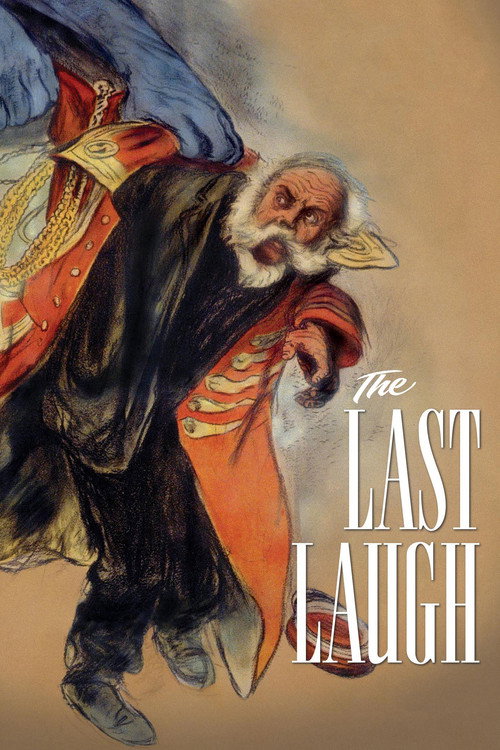
F.W. Murnau's study of a proud hotel doorman, played by Emil Jannings, who is demoted to washroom attendant and stripped of the uniform that gave him his identity. Working from a screenplay by Carl Mayer, Murnau tells nearly the whole story without a single intertitle, letting Karl Freund's unchained camera convey the porter's humiliation and fantasies of grandeur. The camera rides up elevators, swings through the hotel lobby, and tilts with the porter's drunken reeling, techniques that astonished audiences in 1924. A tacked-on happy ending, imposed against Murnau's wishes, only underscores the bleakness that precedes it. The film was a landmark of German Kammerspielfilm and a direct influence on the move toward purely visual storytelling in the late silent era. The film entered the public domain in the United States in 2020.
Drama · Silent
The Last Laugh
1924 - as The Hotel Porter
Fantasy, Horror
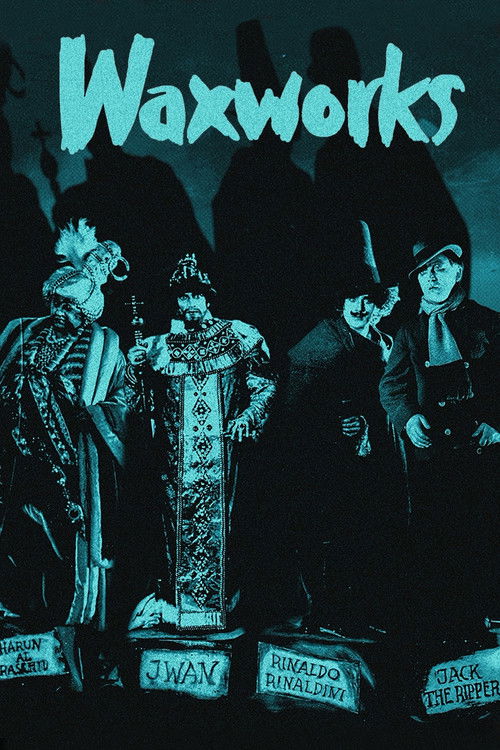
Paul Leni's German Expressionist anthology strings together three tales a wandering poet invents for the figures in a wax museum. Emil Jannings plays the Caliph Harun al-Rashid, slipping through Baghdad in disguise to court a baker's wife; Conrad Veidt is Ivan the Terrible, spiraling into paranoid madness over a poisoned hourglass; and Werner Krauss is a nightmarish Jack the Ripper who seems to step out of the poet's dreams. Leni's sets tilt and bend, his shadows are painted on, and the camera pushes in close on faces twisted by fear and obsession. The film was a bridge between German Expressionism and the horror cinema Leni would help found after he emigrated to Hollywood, where he directed The Cat and the Canary (1927). The film entered the public domain in the United States in 2020.
Fantasy · Horror · Silent
Waxworks
1924 - as Harun al-Rashid